How to Hack Your Dopamine for Deep Work
Second Level Thinking · Issue 18
Leveraging brain chemistry to kill procrastination. Plus, the psychology of trading and why the best winners optimise for decades, not days.
Dopamine, Motivation and Procrastination
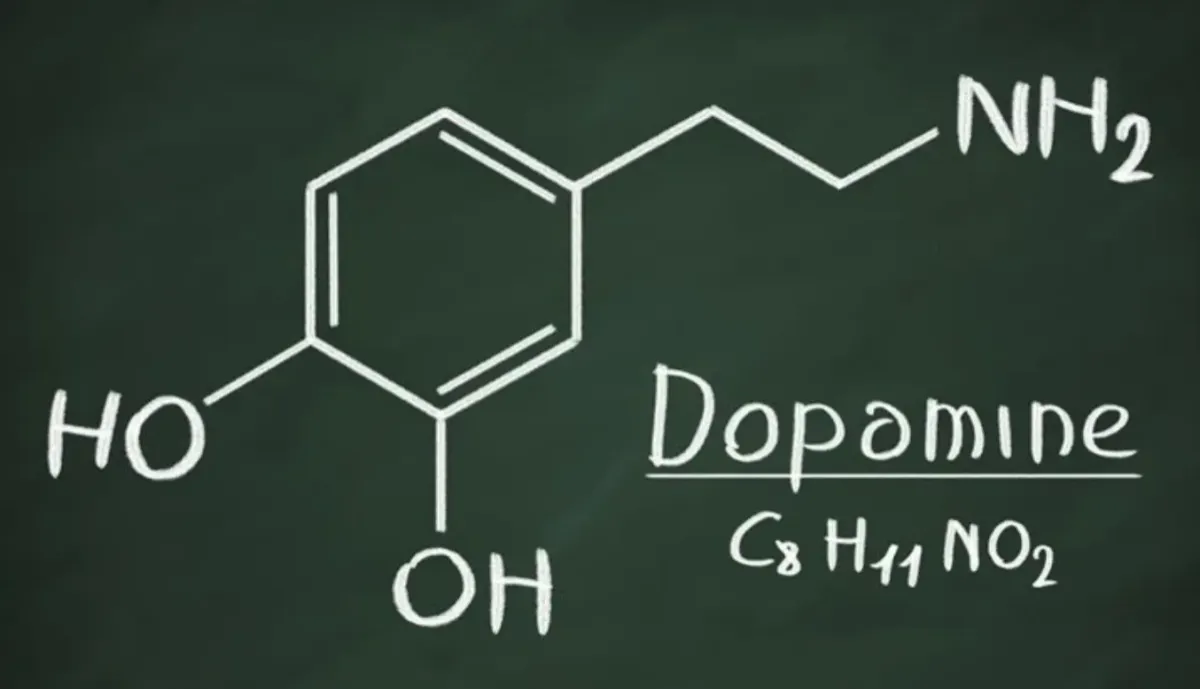
Many people are aware that dopamine is involved in pleasure, but it is also intimately involved in motivation, drive, and pursuit. A neuromodulator, or chemical that changes the electrical activity of other cells, dopamine helps us understand why we become motivated, why we procrastinate, and how we can ensure motivation on an ongoing basis, leveraging effort and the desire to get things done.
As humans, we are attached to the system mechanics of: desire > motivation > outcome. Or in other words: reward > prediction > error. Generally, we want something; to learn a new language, to learn how to dance, to meet someone or to build a successful business. Over time though, when we get an unwanted or non-desired outcome, our confidence diminishes resulting in unmotivated behaviours, procrastination, and in severe instances, depression.
We know we should be doing the thing but we just can’t muster ourselves back into action to continue moving toward the goal.
Here is how the process works:
A peak in dopamine is followed by a trough in dopamine. That trough is experienced as pain, or wanting, or craving.
That pain is a craving or wanting for a specific state that you would like to achieve that is different from the one you are in.
The trough is the stimulus for the ongoing release of dopamine that provides the propellor, the motivation to go forth and seek a desired goal.
The depth of the trough after a dopamine peak is proportional to how high and how steep that peak was.
The rate at which you get out of it, is also proportional to how steep that peak was.
If we are in an unmotivated state, doing something (anything), or sit-and-wait approaches generally don’t work. In many instances the goal deadline approaches and you don’t achieve your goal, or you use anxiety to rush completion at the last minute.
So, when we are not motivated the key to getting out of the pain trough and overcoming procrastination is to do something that is harder than being in the state you are in. Something more effortful, where we can rebound out of the dopamine trough much, much quicker.
For example: if you are procrastinating and you think “I’ll clean the house,” “I’ll pay some bills,” or “I’ll do some admin,” as a way to stall, you could argue that cleaning the house is harder than doing nothing, but it isn’t. In that moment, this is not the case, otherwise you wouldn’t be doing it. For me, I strangely pick-up my phone with no purpose or need to do anything but as a way to release the friction of doing the more important task.
The dopamine system works according to what feels easy or hard in the moment. You need to put yourself in a state that is harder than the one you are in. You need to put your body and mind into a state of discomfort quickly by engaging in an activity not related to your goal, such as a cold shower, or solving a complex math problem. Think about what would be worse than being in this state? Something that is safe but really sucks. It’s not about achieving an outcome here, it’s about forcing your body and mind into a deeper state of discomfort.
When friction becomes the reward, when effort becomes the primary driver, we can pass from idea to successful completion of the goal whilst experiencing greater pleasure. Therefore, we should attach reward to the effort process itself. It’s the old saying of, embrace the journey; it is simply in the doing that we must find comfort.
Dopamine is critical for overcoming procrastination but more importantly, maintaining ongoing drive and healthy confidence within ourselves. For a more in-depth discussion on the topic, please listen to Leveraging Dopamine to Overcome Procrastination of the Huberman Lab podcast, where much of this information derives. Additionally, I recommend an excellent book on the topic called Dopamine Nation by Dr. Anna Lembke.
Trading in the Zone
We have talked a lot recently about risk and models for position sizing that have been largely mathematical in nature, but we have failed to discuss the psychological elements of investing. Today, I would like to transition the conversation to one of the more highly regarded books in this space, Trading In The Zone by Mark Douglas.
Douglas, considered by many to be a pioneer in the field, was ahead of his time in writing about the random nature of markets and more specifically, the psychological implications of them. As a result Trading in the Zone and The Disciplined Trader are critical reading for anyone wishing to explore the topic more deeply.
A core concept of the book is understanding beliefs versus truths: the truth, whatever it is, will determine the possibilities we perceive in relation to what is available from the environment’s perspective (in this case, the market). Essentially, how we interpret what we perceive will determine the decisions we make and the expectations we expect from the outcome. This informs the action we take and subsequently, how we feel about the results of our efforts after-the-fact.
So, to continue on this path, what are the “truths” in relation to financial markets and how do you separate them from the beliefs you hold. Douglas claims there are five fundamental truths which are as follows:
Five Fundamental Truths:
Anything can happen.
You don’t need to know what is going to happen next in order to make money.
There is a random distribution between wins and losses for any given set of variables that define an edge.
An edge is nothing more than an indication of a higher probability of one thing happening over another.
Every moment in the market is unique.
To eliminate the emotional risk of trading, we must neutralise our expectation about what the market will do in any given moment and create a mental-framework that adopts a probabilistic mindset, above all else. In adopting the above truths, our expectations remain in line with the psychological realities of the market environment, creating a care-free state-of-mind.
Furthermore, in order to effectively install the five fundamental truths about trading at a functional level, there are 3 basic characteristics you need to understand.
The Primary Characteristics Of A Belief:
Beliefs seem to take on a life of their own and therefore, resist any force that would alter their present form.
All active beliefs demand expression.
Beliefs keep on working regardless of whether or not we are consciously aware of their existence in our mental environment.
To recap: we must separate out the truth from our beliefs. To do this we must not only understand what are the fundamental truths of the market, but also what the primary characteristics of our beliefs are, so we can identify if they are helpful, or hurtful to us. Once this work is done, our final step is to create a belief in consistency. This is where we break down our objective into its smallest definable parts that we can build processes and subsequent success around.
I Am A Consistent Winner Because:
I objectively identify my edges.
I predefine the risk of every trade.
I completely accept the risk OR I am willing to let go of the trade.
I act on my edges without reservation or hesitation.
I pay myself as the market makes money available to me.
I continually monitor my susceptibility for making errors.
I understand the absolute necessity of these principles of consistent success and, therefore, I never violate them.
Don’t underestimate the work in the above. Each of those points requires you to dig deeper and understand who you are as a trader. Take “I objectively identify my edges” for example: what are your edges? How will you define them? How will you work on developing them? How will you test them and in what market place? How will you stay true to them and build on them? How will you ensure they remain, or are sustained over time?
Trading In The Zone also includes an attitude survey, one to complete prior to reading and one to complete after reading which I recommend doing in support of embedding the text at a deeper level. Remember, the only thing we control are our attitude and our effort. Self-belief requires you to do the work. It is earned, so only you can define the actions and behaviours required to build up yourself. Be patient and kind, as it will take time. It’s like trust, it cannot be earned overnight and can fade quickly. Forget about yesterday and be sure to show up today. It’s about what you do now, in this present moment that counts. Minimal belief will lead to minimal action, which will lead to a minimal result, reinforcing the poor belief you had to start with. To the contrary, a strong belief in self will lead to maximum action and an improved, or successful result however you choose to define it.
Parting Shot
“Most people optimise for the day ahead, a few people optimise for 1-2 years ahead and almost nobody optimises for 3-4 years ahead (or longer). The person who is willing to delay gratification longer than most reduces competition and gains a decisive advantage. Patience is power. We often make choices based on immediate outcomes. What can I do to experience a little joy in the next 30 minutes? What can I accomplish in the next hour? But if you always expect to get a little bit of reward for a little bit of effort, then you often overlook actions that lead to greater payoffs down the road. The relationship between input and output is rarely linear. The course of action that could provide greater happiness, meaning, or satisfaction in the long run may not make you happy in the next 30 minutes. To prioritise the day, think about the decade: If I want to be on track to achieve x in 10 years, what do I need to do today?”
— James Clear