Breaking Cycles: From Bad Habits to Inflationary Oil
Second Level Thinking · Issue 5
What is driving the current surge in oil and how it ripples through the economy. A framework for habit formation, breaking bad cycles, and the "invisible" ROI of discipline.
Changing Habits
Habits are repeated behaviours and the result of small decisions we make and the subsequent actions we perform each day. It’s estimated between 40-50 percent of our daily actions are not conscious decisions but habits. Essentially, then, much of our life comprises the sum of our habits. Frequent habits ultimately form who we are, this includes not only what we do, but what we think.
Bad habits greatly impact us both mentally and physically, they deplete time and energy and in most instances restrict our ability to achieve desirable outcomes. Good habits on the other hand compound and propel us toward our goals, giving us greater purpose and agency. So why do we still perform habits even when we know they are inherently bad? And how do we form new habits that are sustainable when we want to improve?
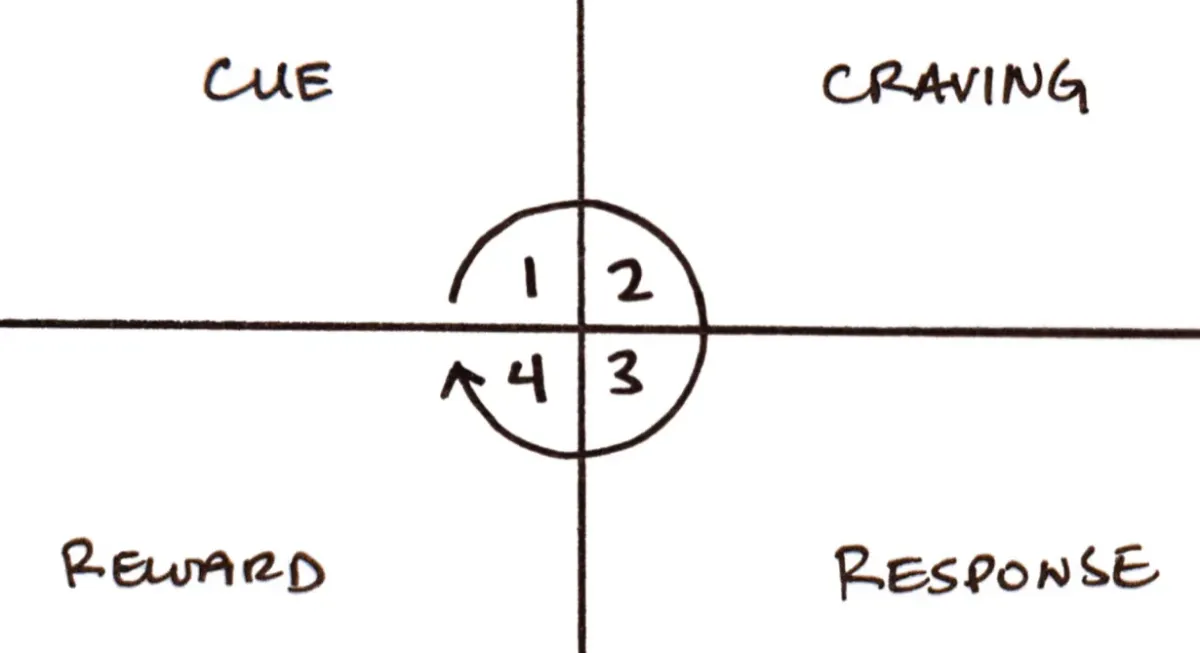
The framework for building a habit can be laid out in four process steps: cue, craving, response, and reward, as James Clear details in Atomic Habits, an exceptionally practical read that has now sold over 15 million copies worldwide. The four stages of habit, or the habit feedback loop is an endless cycle and is continually running. Our minds are endlessly analysing our internal and external environment for clues as to where rewards are located.
“The cue triggers a craving, which motivates a response, which provides a reward, which satisfies the craving and, ultimately becomes associated with the cue,” and when assessing, we can break these four steps into two phases, the problem phase and the solution phase. Let’s look at an example:
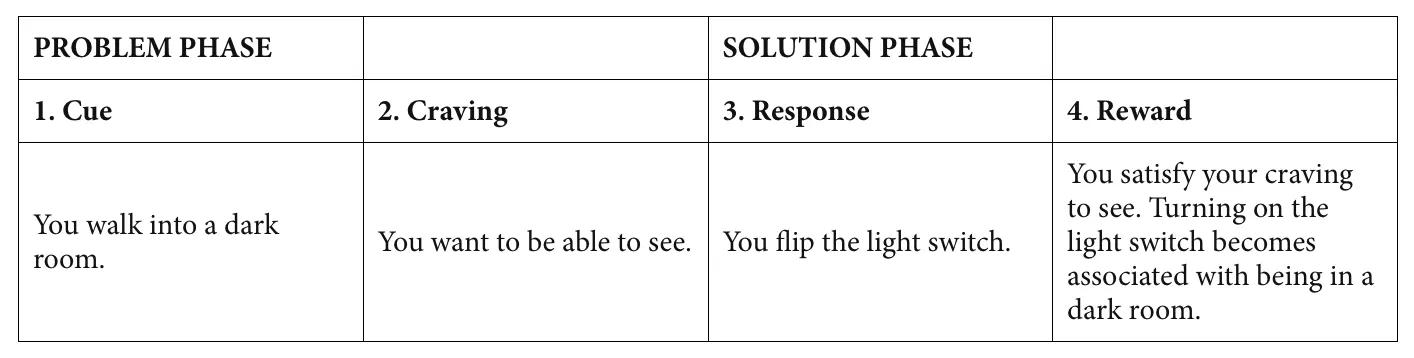
A peak in dopamine is followed by a trough in dopamine. That trough is experienced as pain, or wanting, or craving. That pain is a craving or wanting for a specific state that you would like to achieve that is different from the one we are in. The trough is the stimulus for the ongoing release of dopamine that provides the propellor, the motivation to go forth and go and seek a desired goal, explains Andrew Huberman.
“All behaviour is driven by the desire to solve a problem. Sometimes the problem is that you notice something good and you want to obtain it. Sometimes the problem is that you are experiencing pain and you want to relieve it. Either way, the purpose of every habit is to solve the problems you face.” James Clear
Creating Good Habits
Formation of sustainable, good habits is rooted in our identity with self. Change of identity will result in a change in behaviour - you need to believe in yourself first and foremost. Stepping back from this there are three layers: outcomes, process and identity to behaviour change: the first layer is to change the outcomes, or goals we associate with. The second layer is to change the process, or the habits and systems that move us toward or away from a desired goal. The third layer is the identity change and looks further inward at limiting beliefs, self-image and other judgements and assumptions.
Start by rooting in the much deeper question of who you want to be. Be it as an individual, as a team or as a community. What do you want to stand for? What are your principles and values? Who do you wish to become? Then proceed with answering the following questions:
Decide the type of person you want to be.
Prove it to yourself with small wins.
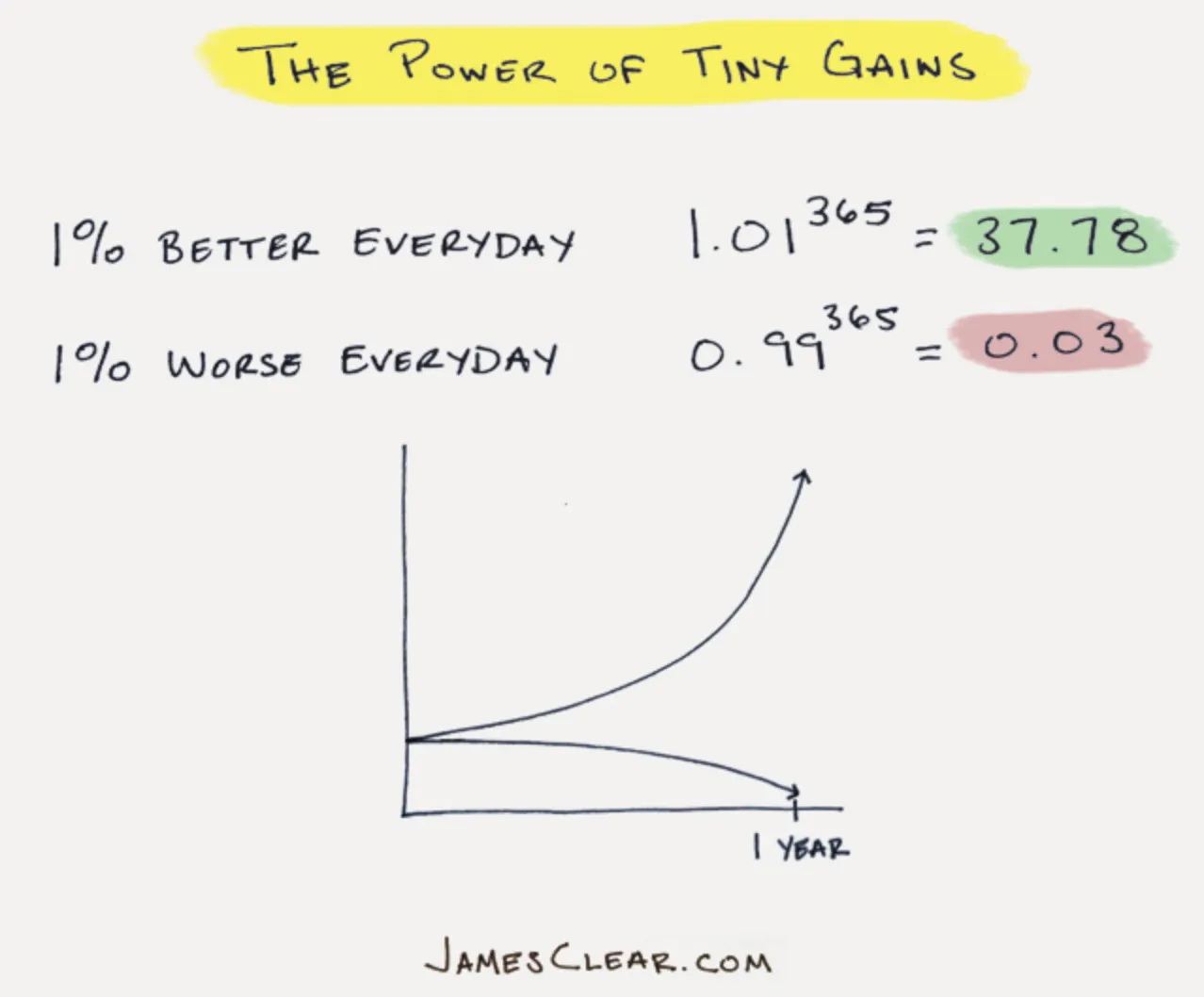
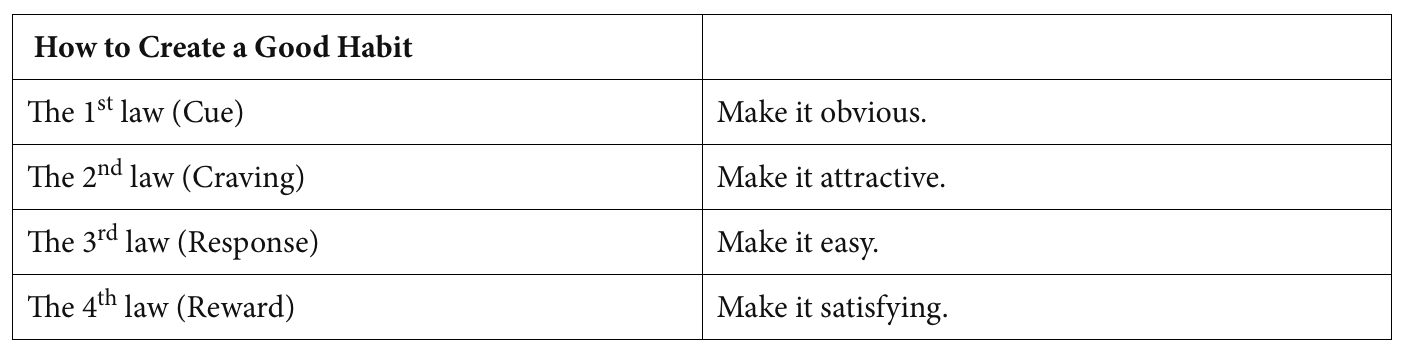
Applying the above power law, new habits should be easy, especially at the start. Consistency is key and you can continue adjusting and refining as you go. If you continue to add 1% per day, it will increase quickly. Split it into smaller segments where required and ensure momentum is sustained. Additionally, use the prompts below against each of our habit process steps.
“Success is a few simple disciplines, practiced every day; while failure is simply a few errors in judgment, repeated every day.” Jim Rohn
Breaking Bad Habits
Generally speaking, whenever we want something, this is inevitably followed by getting some things we don’t want, or what can be described as a non-desired outcome. As a result our confidence drops over time, leading to unmotivated behaviours, procrastination, or in severe instances, depression. In most instances bad habits are a way of dealing with stress and boredom. On occasion this can be the result of deeper issues but more often than not it is a limiting belief, such as fear of failure, or anxiety of what others think that is holding us back.
Good or bad, all the habits in our lives serve a purpose, be it emotional or biological. Email and social media destroy productivity and focus and can often lead to feelings of being overwhelmed or stressed, but both also help us feel connected and give us a sense of comfort and that we are not “missing out” in social settings.
This will take time and effort, be sure not to be highly critical of yourself whilst you attempt this change. Instead, it’s awareness that will support you in making sustainable difference. Identify and document:
When does your bad habit actually happen?
How many times do you do it each day?
Where are you?
Who are you with?
What triggers the behaviour and causes it to start?
Once you have identified a habit, or list of habits and answered the questions above, walk yourself through the following ideas: try substituting your bad habit with something else - remember, we don’t eliminate a habit, we replace it! Identify the triggers causing the bad behaviour and try to remove as many as possible. Try joining forces with somebody else and work as a team to remove the habit, or surround yourself with others who live the way you want to live; our external environment is critical. Be sure to visualise yourself succeeding. Overcome negative self-talk, “I’m stupid and nobody respects me, and I’m working to develop a valuable skill.” Plan for failure, we all slip up. What’s more important is how quickly you return to your improved habit and learn from what has occurred. Additionally, try inverting the laws above to:
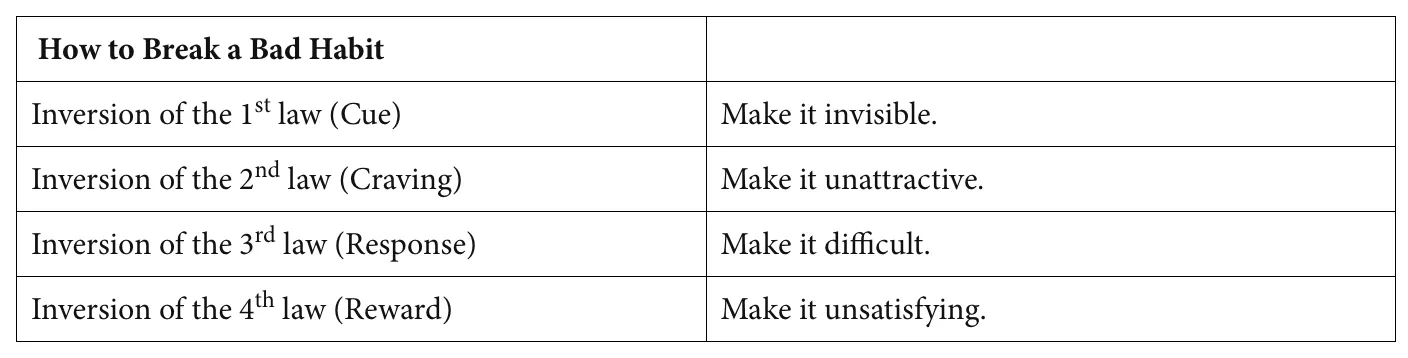
How many times have you thought, or heard someone say, “why don’t I do what I say I’m going to do?” “Why do I say something is important but not make time for it?” “Why don’t I start a side business, save money, or stop something seemingly unhelpful?” I am not claiming this framework is exhaustive and our complete psychology can be summarised as a habits framework, but I do know that every goal is destined to fail if it goes against the grain of who we are. For those seeking a change in behaviour, you can start by asking yourself: how can I make it obvious? How can I make it attractive? How can I make it easy? How can I make it satisfying? This is a great step toward meaningful change.
Inflationary Oil
I must confess, I love oil! Not in an environmental sense, but in a macroeconomic sense. I love the complexity of it, the multi-nation drivers of supply and demand, the way its price action moves and trends and how it acts independently of the broader market.
Oil’s first quarter gains have been bolstered somewhat by a recent demand outlook for China, the biggest consumer of crude oil globally. China snapped a five-month decline in industrial activity last month, improving hopes that the superpower is on the mend. Supported more broadly by the Ukraine-Russian war and increased tensions in the Middle East, crude rallied this year as OPEC restricted supply to push prices higher and offset increased flows from outside the cartel.
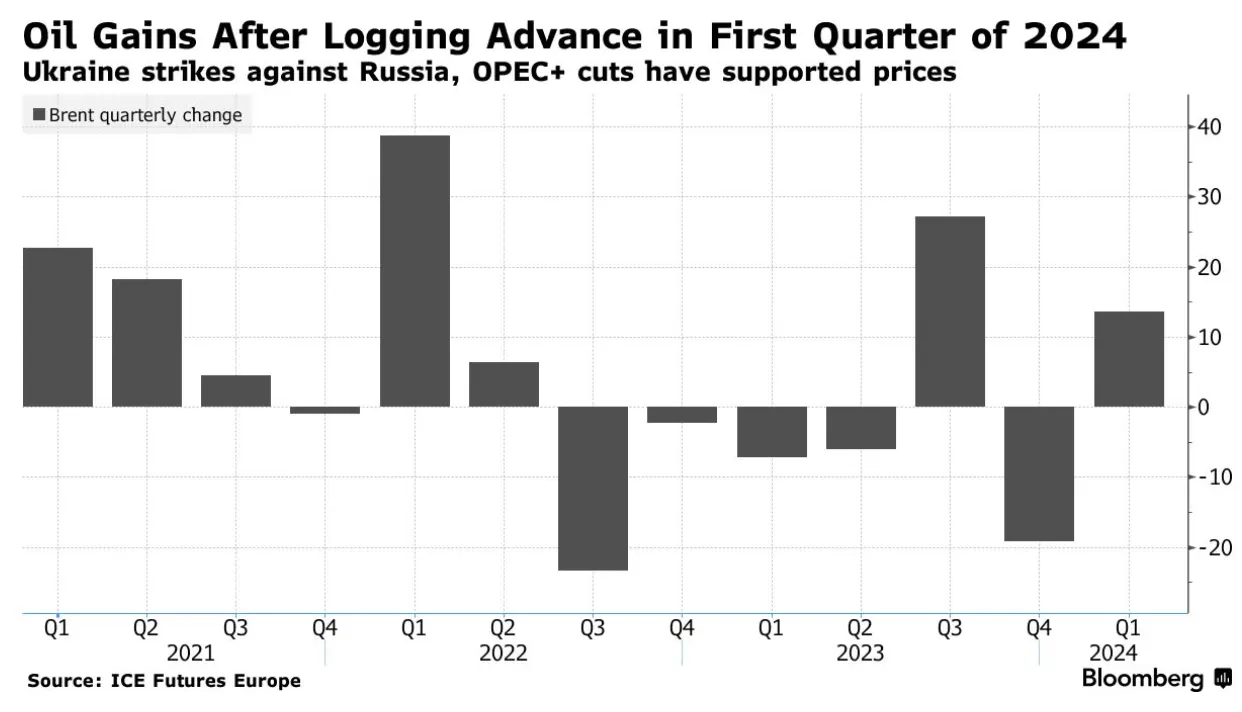
US oil exports have set five new monthly records with many believing the West’s sanctions on Russia are finally taking effect. “US production is going up and OPEC and Russian production is going down — so the US, by definition, is going to have more market share,” said Gary Ross, a veteran oil consultant turned hedge fund manager at Black Gold Investors LLC. While the US can’t fully replace crude due to differences in quality and voyage times, we have seen a pivot. India, the third largest crude importer globally and Russia’s second largest buyer after China has increased US supply. At the same time, Russian oil imports have fallen by about 800,000 barrels a day since last year’s high point, Bloomberg tanker tracking shows.
From an industry perspective, oil and gas has had its strongest start in five years, with over $84 billion in mergers and acquisitions announced throughout the first quarter, reports Bloomberg. A continuation of Q4 last year where US oil and gas producers confirmed multiple deals, including Exxon Mobil Corp.’s massive $68-billion deal for Pioneer Natural Resources Co. in October, as energy firms look to line up new places to drill.
In China, electric vehicles will displace more than 20 million metric tons of crude demand this year, equivalent to 10% of the country’s gasoline and diesel consumption, so why the bullish outlook? One argument is due to the rise in processing plants to support the expansion of commodity chemicals over crude, as the country looks to move its petrochemicals sector onshore and displace previous imports by the likes of Japan, South Korea and Europe.
“Roughly 90% of China’s increased thirst for oil between 2021 and 2024 is coming from the chemical feedstocks of LPG, ethane, and naphtha, according to the International Energy Agency. Gasoline and even jet fuel and kerosene are barely increasing.”
US Energy Information Administration (EIA) forecasts were slightly adjusted as a result of falling inventories, and they now expect the Brent crude oil spot price will average $88 per barrel (b) in 2Q24, up $4/b from their February STEO, with Brent price averaging $87/b for the year.
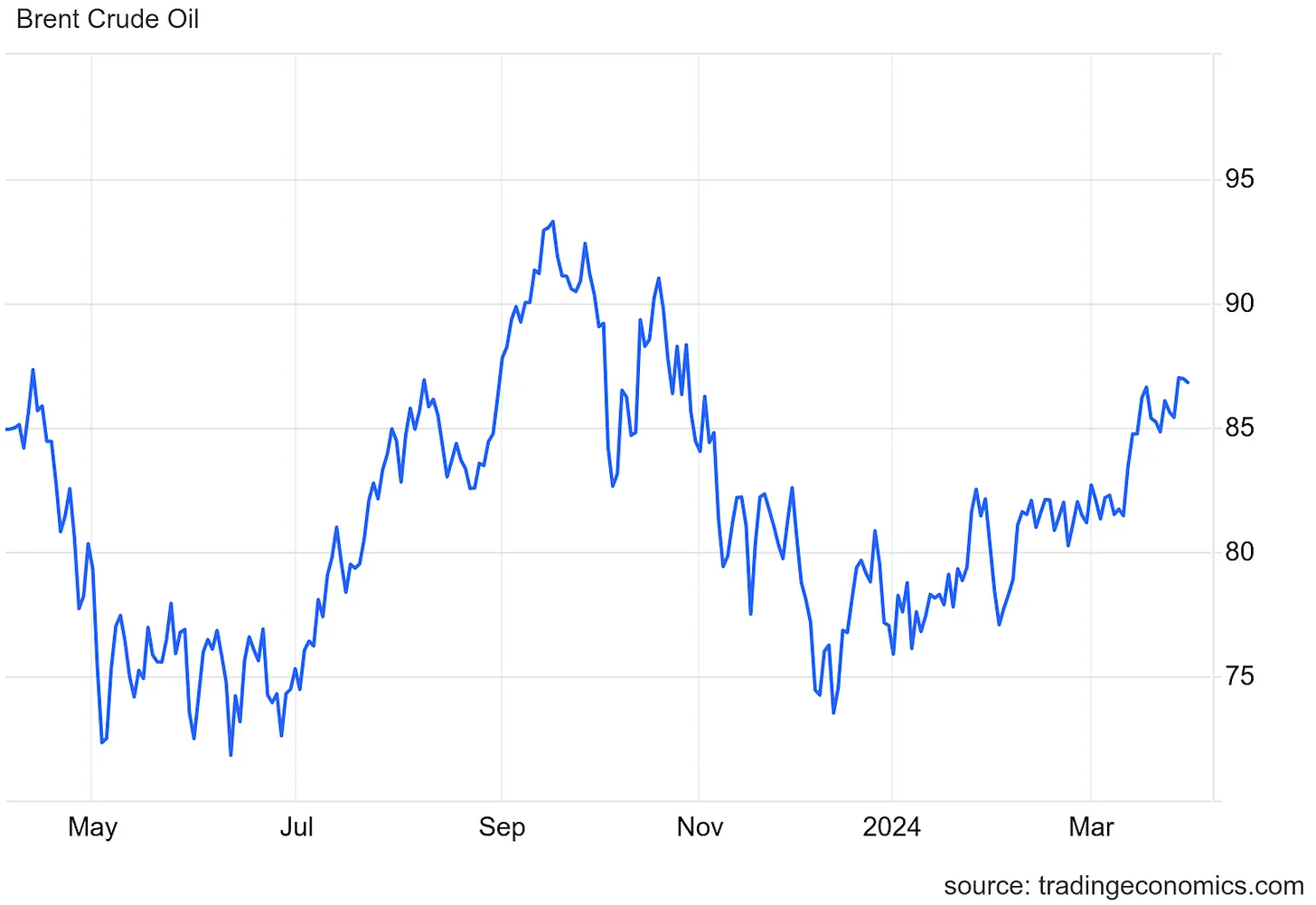
OPEC is a formation of 12 countries that controls ~40% of the world’s oil supply. It has stated that it will continue current restrictions into June, with Saudi Arabia selling much less oil than they are capable of producing. “The kingdom wants a tight oil market,” reports Goldman Sachs, who also forecasted a modest outlook of 1.5 million barrels a day, or about 1.5% of the world demand. With most agencies aligned on flat to modest growth into year-end, it’s still likely we will see notable volatility over the coming period. It is worth tracking:
Supply: OPEC meetings, and in particular any adjustments to the supply of oil into the market. Notable countries: United States, Russia and Saudi Arabia.
Demand: adjustments in the use of high consumption nations. Notable countries: China, India and the United States.
Rising tensions: adjustments to the current state of wars, or tension by region. This includes escalation, or de-escalation of conflict and other political instability.
Changing economy: impacts as a result of disruption, such as electric vehicle impacts and increases in chemical production and other materials.
Supply: mergers and acquisitions, new deposits and high-impact changes to key producers across the market. Notable companies: Saudi Aramco, PetroChina, Chevron, ExxonMobil and Shell.
Parting Shot
“Physical fitness, for me, is a way to manage my negative affect. It’s actually a happiness technique for me. It doesn’t make me happier, it makes me less unhappy. That’s what physical fitness will do — it’ll buy you less unhappiness.”
— Arthur C. Brooks