Overcoming Paralysis: Fear Setting and Financial Conviction
Second Level Thinking · Issue 15
Why Tim Ferriss’ "Fear Setting" is a prerequisite for action. Applying Stanley Druckenmiller’s aggressive risk management to your portfolio.
Fear Setting
Risk is a fascinating concept: when navigating it in business and in life, it is common to manage risk with heightened awareness, disciplined processes, and due diligence. Unfortunately though, we are more likely to apply these tools when evaluating the risk of changing, rather than evaluating the risk of staying the same. As a result, we greatly underestimate the status quo and the cost of doing nothing.
There are a range of factors as to why we do this, but ultimately, we maintain the status quo out of fear; fear of failure, fear of rejection, fear of negative social implications and fear of financial loss, among others. These fears present themselves in different ways and across an array of situations; from quitting your job and moving to the other side of the globe, to simply developing the courage to speak up in a team meeting, or at home with a spouse.
But what if we did the things we avoid? What if we pushed through our fear induced procrastination and had a stronger bias toward action? Stoicism has many meanings but in the context of this exercise, we are training ourselves to separate what we can control from what we cannot control, and therefore aiming to decrease emotional reactivity. As Seneca famously stated: “we suffer more often in imagination than in reality.”
The Fear Setting tool Tim Ferriss lays out in his TED talk is a tool that can be adapted across any situation and timeline. It provides a template for us to lean into our fears and confront them, so we can better plan to overcome them, enabling greater growth. Not to be viewed as a panacea (as many of our fears are deeply rooted), we should aim to complete this exercise at least once per quarter, or even monthly in some instances.
Let’s give it a try: the first page of fear setting is about getting up close and personal with your fears. Instead of shying away from thinking about it, start to understand them more clearly.
What if I? (document your fear):
What if I (finish the sentence).
Define (what is the worst possible outcome, or the fears you have in taking action):
List 1-20 bullet points.
Prevent (what could eliminate, or at least decrease the probability of those worst-case scenarios happening):
List 1-20 bullet points.
Repair (if worst case eventuates, how can you repair or minimise the damage):
List 1-20 bullet points.
Now, in the ‘Define’ section, assess the impact of the worst-case scenario. Rate 1-10, with 1 being very minimal impact and 10 being permanently life-altering in a significant way.
As you move through the first page, reflect and keep the following front-of-mind: has anyone else in the history of time, less intelligent, less driven than me figured this out? Chances are, yes!
On the second page, give yourself space to be more open and consider what might go right if you do take action.
Write down what might be the benefits of an attempt, or partial success?
List your detailed answer here. Unpack this.
Now, assess the potential positive benefit of these successes. Rate 1-10, with 1 being very minimal impact and 10 being permanently life-altering in a significant way.
We are attempting to play up the fears and take a conservative look at the upside. If you were to continue, might you build confidence, build a new skill, is there financial upside, relationship upside, something else, perhaps.
On the third page, consider all the consequences of inaction including financial, emotional, and physical at each time on the horizon. Be detailed, this step is equally as important as the others but often forgotten in decision-making.
The cost of inaction in 6-Months:
List 1-20 bullet points.
The cost of inaction in 12-Months:
List 1-20 bullet points.
The cost of inaction in 3-years:
List 1-20 bullet points.
That’s the template in a nutshell and I strongly encourage you watch Tim’s TED talk for greater clarity. You will find the impact of having a go in most instances is very small. Essentially, in taking the time to examine significant fears more closely it keeps us grounded in reality and focused on taking action. I will reiterate, more often than not we don’t consider the cost of the status quo and we underestimate the negative impacts of doing nothing.
“Remember, fear doesn’t exist anywhere except in the mind.” Dale Carnegie
We must tame our monkey mind and capture our thoughts on paper. In a previous issue where we provided a framework for setting and achieving goals, we talked about studies that showed the benefit in visualising failure during goal pursuit. I would suggest adding a layer to the visualisation and unpacking the fear in greater detail through this fear setting tool, overlaying them for maximum effect.
What is something you fear and could use this template for right now? Take 5 minutes and simply start. Just think, what if inaction was no longer an option…
Stan Druckenmiller
Stan Druckenmiller is a retired hedge fund manager and is the current chairman and chief investment officer of Duquesne Family Office which he founded in 2011. You can’t go far without hearing Druckenmiller’s name in the investing world, and for good reason. His Duquesne Capital Management delivered ~30% annual returns over its last decade before closing in 2010.
Perhaps most famously, Druckenmiller's collaboration with George Soros to "break the Bank of England" in 1992 is a hallmark of his career. Their strategic short-selling of the British pound garnered over $1 billion in profits, showcasing Druckenmiller's ability to leverage macroeconomic trends for monumental gains. This cannot be overstated, this trade alone is still considered by many to be the greatest in history. “Soros is the best loss taker I've ever seen. He doesn't care whether he wins or loses on a trade. If a trade doesn't work, he's confident enough about his ability to win on other trades that he can easily walk away from the position,” stated Druckenmiller.
Investment Philosophy:
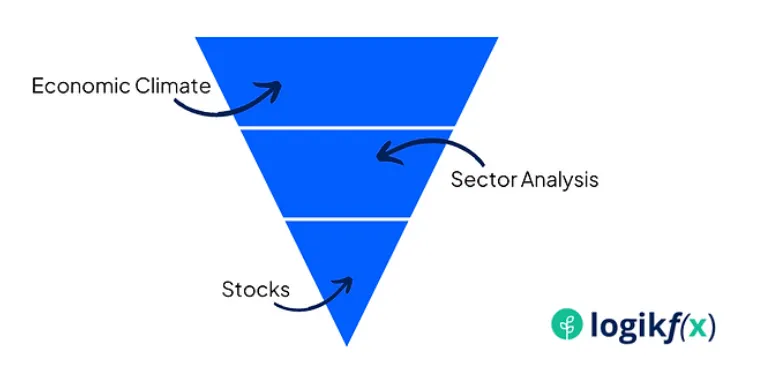
With a unique mix of brave bets, analysing macroeconomic factors, and employing risk management practices, his top-down approach based on political, social, and economic research is combined with long-term projections resulting in a multifaceted strategy. For risk management, he is known to use stop-loss orders as a prevention of major losses as his preferred method. From his investment history, we can see that he doesn’t stick with one approach and that he is willing to use different strategies based on the market conditions, economic outlook, and investment target he is ready to adapt.
Interestingly enough, as stated by Forbes, Druckenmiller doesn't use the types of signals traditional economists use to predict the economy, like employment, macro factors and top-down statistics. Stan started his career as a bank analyst and learned from inside the stock market that it had a remarkably "prescient" message about future economic activity. He explained that stocks usually lead fundamentals by about 6 to 12 months. Additionally, Druckenmiller pays attention to industries that lead and lag the economy, with housing being the most obvious. He explained that if these leading industries are turning up or down, it signals what the economy is about to do.
According to Druckenmiller, the 10-year Treasury was the most important signal in the bond market, but it is no longer the case as central banks have been buying trillions of dollars worth of bonds, “manipulating” the price, so any potential signals that could have come from the bond market have been tainted over time.
“Earnings don't move the overall market; it's the Federal Reserve Board... focus on the central banks, and focus on the movement of liquidity... most people in the market are looking for earnings and conventional measures. It's liquidity that moves markets.”
Disagreeing with the traditional wisdom taught in business school which states highly diversified portfolios have less risk, Stan prefers the contrary and keeps a more concentrated portfolio, stating that investors who keep 15% to 20% of their asset base in macro positions will avoid getting stale. He advised investors to remain paranoid, constantly reevaluate their open positions, and keep an open mind. Interestingly enough, he tended to act on a position and then build his thesis after-the-fact, not to miss the move itself. Where required, he was willing to move quickly to get into a position and do the research while letting the initial period play out.
Top Down Investing:
Understanding Market Trends: Druckenmiller emphasises the importance of aligning investments with overarching economic and market trends, advising traders to look beyond the present and envision future market shifts.
Risk Management: Advocating for a disciplined approach to risk, Druckenmiller's strategies involve calculated leverage and a readiness to pivot from losing positions to preserve capital.
Technical Analysis: While not his primary tool, Druckenmiller acknowledges the value of technical analysis in timing market entries and exits, supplementing his macroeconomic outlook.
Position Sizing:
When you're trying to maximise your returns, you require an edge in the market. Edge means you have a belief or a mathematical advantage that's not reflected in the current odds or market price. Additionally, how much you risk on that when you have found an advantage, will result in your expected value which is multiplied by your size.
Think about it another way, if you had perfect information, you knew you were going to make money, you would bet everything you could, right? Assuming limited belief, there are degrees of certainty that sit below that. So there's this relationship between edge and position size, and that leads to your total ability to generate excess returns. Druckenmiller has stated the main thing that he learned from Soros was that position sizing was 70-80% of the game.
This is quite profound, as Soros made money on fewer than 30% of his trades. Think about that for a moment; arguably the greatest trader ever was right about 30% of the time and still made billions. This connects well to a particular rule of trading in cutting your losses short and riding your winners from our last issue. If these cumulative losses are not capped relative to the overarching portfolio size, one cannot continue to play the game and you will blow up. Conversely, if managed right, one can generate above market returns if true edge does exist.
So What:
Is your edge specific to the industry you operate in, or a general hypothesis on the broader market environment? According to Druckenmiller, doing what Ben Graham, the original value investor and mentor to Warren Buffett did just doesn’t work anymore and as investors we need to adapt. Graham famously bought companies that owned more assets than their market capitalisation and we must now look beyond this. Furthermore, "do not invest in the present. The present is already priced into the market. You have to think ahead." So where do you see opportunity and can you quantify or structure this into a series of positions where there is asymmetrical risk? Can you position size to ensure you always stay in the game and live to fight another day? Answering these questions is not easy, but in doing so you will define your own edge, or at the very least, if you even have one.
Parting Shot
"Think of it this way: there are two kinds of failure. The first comes from never trying out your ideas because you are afraid, or because you are waiting for the perfect time. This kind of failure you can never learn from, and such timidity will destroy you. The second kind comes from a bold and venturesome spirit. If you fail in this way, the hit that you take to your reputation is greatly outweighed by what you learn. Repeated failure will toughen your spirit and show you with absolute clarity how things must be done."
— Robert Greene, Mastery