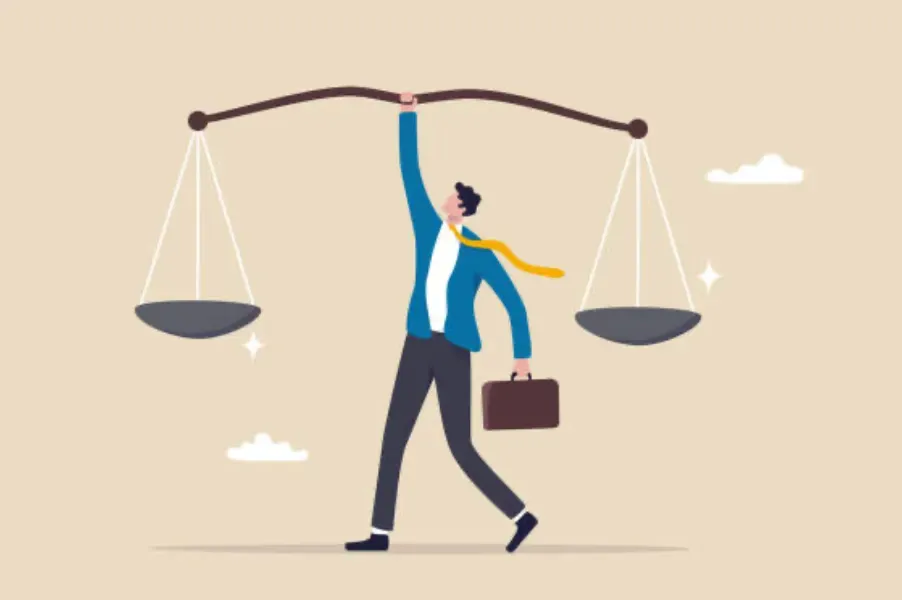
The Taste Premium
Second Level Thinking · Issue 53
The human ability to know what’s worth doing, and what’s merely good enough. The most optimistic story in technology right now might be the quiet return of taste.
I’ve spent the last few issues circling the anxiety of flattening org charts, the capture plays, the doom letters, the markets that can’t decide if they’re in a boom or a bubble. All of it real, all of it worth thinking about. But I want to turn the coin over this fortnight, because there’s a story on the other side that almost nobody is telling, and it’s the hopeful one. It’s also, I think, the true one.
Here it is in a sentence: the very thing making everyone anxious, that is, the machine’s ability to generate near-infinite competent work, is quietly making one deeply human faculty more valuable than it has ever been. That faculty is taste. And unlike almost everything else in this transition, taste is something you can actually build.
Let me explain.
What the machine actually eats
Let’s start with what AI is really doing to knowledge work, because the panic tends to blur it.
Take any piece of cognitive work - a strategy, a report, a design, a plan - and lay it out as a chain. At one end sits the choosing: deciding what’s even worth working on, framing the right question, sensing the angle everyone else is missing. In the middle sits the doing: the gathering, the drafting, the modelling, the exhaustive grind of turning intent into a finished artefact. And at the far end sits the owning: the judgement to look at the output, decide it’s right or decide it’s not good enough and kill it.
For all of history, the middle was where most of the work and most of the value lived. It was expensive and it took teams, time, and years of accumulated skill. So that’s where we built careers, measured status, and spent our days.
The machine eats the middle. That’s the whole story, really. Gathering and drafting and first-pass analysis (the stuff that used to command a salary), now costs almost nothing and arrives in seconds. And when the middle collapses in price, the value doesn’t vanish. It rushes to the two ends the machine can’t reach: the choosing, and the owning. Chamath Palihapitiya put it well in a recent talk on how he’s preparing for this:
The highest-return skills left, he argued, are taste, judgement, and an understanding of incentives. Not the production. The curation. Knowing which question deserves an answer, and having the nerve to stop when the answer is merely plausible rather than genuinely good.
He frames it as two sides of a single coin. Upstream, taste chooses. Downstream, judgement signs. A brilliant output nobody had the taste to ask for is wasted; a plausible output nobody had the judgement to stop is dangerous. Taste without a signature is just an opinion. The signature without taste is just liability. The machine will hand you a thousand competent options. Which one matters and when to say “none of these, start again,” is the work now. And it is entirely yours.
So what is taste, actually?
We use the word loosely, usually to mean something aesthetic and a little precious; good taste in wine, in furniture, in shoes. That’s not what I mean, and it’s not what makes it valuable.
Taste is judgement married to a point of view. It’s the capacity to look at a field of options, all of which are defensible, most of them fine, and know which one is right. Not right by a rule you can write down, but right by a sensibility you’ve developed. It’s the chef who knows the dish needs acid, not more salt. The editor who cuts the clever paragraph because it’s serving the writer’s ego and not the reader. The operator who can feel, before the data confirms it, which of five sound projects is the one that actually matters. It’s the final ten per cent, the bit that separates competent from extraordinary and it has always been the hardest part to teach, precisely because it isn’t a procedure. It’s a self.
And that’s exactly why the machine can’t supply it. Taste requires three things a model fundamentally lacks: a point of view, built from a particular life; the capacity to care about the difference between good and great; and the willingness to stand behind a choice. An AI can give you the average of everything that’s ever been done. Taste is the opposite of an average. It’s the specific, opinionated, sometimes unreasonable conviction that this is better than that, and the average of all human output is, almost by definition, the enemy of that conviction. When everything regresses to competent, the only thing that stands out is a point of view.
Why it’s getting more valuable, not less
Here’s the counterintuitive bit, and the heart of why I find this optimistic.
Scarcity determines value, and the machine has just inverted what’s scarce. When producing a competent option was expensive, the ability to produce was the prize. Now that competent options are infinite and free, the ability to produce is worth almost nothing and the ability to choose well among infinite options becomes the whole game. Abundance of supply creates a premium on discernment. When anyone can generate a hundred logos, a hundred strategies, a hundred drafts in an afternoon, the person who can look at the hundred and know which one is right - and why - holds all the leverage. We are moving from an economy that paid for making things to one that pays for knowing which things are worth making. That’s the taste premium.
You can already feel it. The constraint in creative and knowledge work is no longer “can we make it?” It’s “is it any good, and how would we even know?” Prompting is not the scarce skill, a thousand people can write the same prompt. Knowing what to ask for, and recognising the good answer when it comes back, is the scarce skill. In a world where everyone has the same superhuman tool, the only durable edge is the quality of the person wielding it.
This connects straight back to what I argued a few issues ago about judgement being the last human edge. Taste is its twin. The upstream half. Judgement is deciding well under uncertainty; taste is knowing what’s worth deciding about in the first place. Together they’re becoming the entire value-add of a human being in the loop. Which sounds like a demotion until you realise it’s a promotion: we’re being freed from the grind and asked, instead, to be more discerning, more opinionated, more ourselves.
The best part: taste can be built
The radio producer Ira Glass has the truest thing anyone’s said about this. When you start out doing creative work, he observed, your taste is already good and that’s why you got into it. But there’s a gap: your taste outruns your ability, sometimes for years. You can see that what you’re making isn’t as good as what you admire, and it’s agonising. Most people quit in that gap, mistaking it for a lack of talent. But the gap is not the problem. The gap is the engine. Your taste is the thing pulling your ability upward. It comes first, it leads, and the only way to close the distance is to keep putting in the work until your skill catches up to your sensibility.
So taste isn’t the finish line. It’s the starting equipment, and you can sharpen it deliberately. A few ways that actually work:
Curate your inputs ruthlessly. You become what you pay attention to. Taste is built by sustained exposure to the genuinely excellent; the best writing, the best design, the best thinking in your field and well outside it. If you feed yourself a diet of average, you will calibrate to average. Go deep on the masters. Study why the great thing is great, not just that it is.
Develop range. This is where the issue on having too many interests comes back around. Taste is largely the ability to make connections across domains; to borrow a solution from music and apply it to a business problem, to sense a pattern because you’ve seen its cousin somewhere else entirely. The broader your inputs, the richer your taste. Your scattered curiosities aren’t a distraction from developing judgement. They’re how it’s made.
Pay attention to what moves you and ask why. Most people consume passively and never interrogate their own reactions. The practice is to notice: that landed, that didn’t, and why. Taste is just refined attention, made conscious and deliberate over thousands of small reps.
Practise the nerve to say “no.” The hardest, most valuable half of taste is subtractive and the willingness to reject the competent answer, to kill the good-enough draft, to stop. The machine will always give you something usable. Taste is the discipline to say “not good enough, again,” when usable is on offer and easy. That nerve is a muscle. Build it.
Put your taste into the world and stand behind it. Taste developed in private is just preference. Taste becomes valuable the moment you apply it to a real choice and own the outcome; the sign-off, the shipped thing, the call you made and put your name to. That’s the downstream half of the coin, and you only strengthen it by using it.
The quiet, hopeful reframe
Step back and look at what’s actually happening, stripped of the fear.
For two centuries, technology has taken the mechanical parts of work off our hands, first the muscle, now the routine cognition. Each time, the panic was the same: there’ll be nothing left for us to do. And each time, what was left for us to do turned out to be more human, not less. We keep being pushed up the chain, out of the doing and toward the choosing and the caring and the meaning.
This wave is just the most dramatic version of that old pattern. The machine is taking the grind - the gathering, the drafting, the competent middle, and handing back to us the two things it was never going to be able to do: decide what’s worth making, and have the taste and the nerve to know when we’ve made something good. Those aren’t the consolation prizes of the AI age. They’re the most human faculties we have, and we’re being asked to develop them more seriously than any generation before us ever had to.
Parting Shot
So here’s the question for the fortnight: if the production is now free and the choosing is everything, what are you deliberately doing to sharpen your taste, and whose “merely good enough” are you still too polite to say no to?