Implementing Deliberate Practice and a Strong US Dollar Wreaks Havoc
Second Level Thinking · Issue 6
Why your inability to distinguish decision types is slowing you down. The fallout of a strong US Dollar. Plus, a step-by-step guide to deliberate practice for elite performance.
Deliberate Practice
Deliberate practice is purposeful and systematic and is what turns amateurs into professionals, it is absolutely essential for expert performance. “It entails considerable, specific, and sustained efforts to do something you can’t do well - or even at all,” as Anders Ericsson & Robert Pool write in Peak: how all of us can achieve extraordinary things.
Research shows that only by working deliberately at what you can’t do does one turn into an expert, as evidence consistently and overwhelmingly shows that experts are always made and not born. “Genetics influence performance, they do not determine performance” writes James Clear. Obviously there are limitations to this based on your genetic composition and the discipline you choose to pursue, but do not confuse destiny with opportunity.
Practice means preparing but not all practice makes perfect. When the majority practice, studies show we focus on what we already know and rehearse in low-pressure environments. Last fortnight we talked about habit formation - many of us spend up to 50% of our time doing repeated tasks and practicing various skills daily, but we don’t automatically get better because we continuously do something. If we want to improve at something, we need to know specifically what we need to change or improve to get there, otherwise we plateau! I also feel this is where the 10,000 hour rule popularised by Malcolm Gladwell is misconstrued, as simply practicing a skill for 10,000 hours does not move one toward mastery without a deliberate form of intent and structure.
Often we are simply doing something for fun or enjoyment and don’t require deliberate practice, but many of you will have a specific skill you are attempting to develop. In Mastery, Robert Greene details that our sense of purpose is elevated during the creative process - we feel more alive as a result of making something and not simply consuming and in doing so we are in fact creating ourselves. How then, can you tell when you’re dealing with a genuine expert and what defines expertise?
Real expertise must pass three tests. First, it must lead to performance that is consistently superior to that of the expert’s peers. Second, real expertise produces concrete results. Brain surgeons, for example, not only must be skillful with their scalpels but also must have successful outcomes with their patients. A chess player must be able to win matches in tournaments. Finally, true expertise can be replicated and measured in the lab. As the British scientist Lord Kelvin stated, “If you can not measure it, you can not improve it.”
Remember our brains will default to the path of least resistance, as we are inherently lazy. You will need to regularly overcome increased friction and be very deliberate about when and how you move toward such expertise, this includes beginning practice with a plan in mind. You must know what you are working on and how you intend to improve. Genuine experts not only practice deliberately but think deliberately, moving outside your comfort zone will require discipline and sacrifice.
How to Implement
Plan: ensure your overarching vision or goal is well defined and aligned with your identity. Similar to habit formation, is this skill development aligned with self.
Break it down: take the skill you are trying to improve and break it down into bite-size chunks. Reduce friction and make starting and sustaining high-effort easier.
Two kinds of learning: improving the skills you already have and extending the reach and range of your skills. Be deliberate about when you target each component and start with higher-friction tasks first when energy is highest.
Practice: as much as you feel you can accomplish with concentration. This will vary widely depending on the skill and the individual. Look for the sweet spot, right on the edge of your current ability.
Support: find coaches and mentors to support acceleration of the learning curve. Studies show the majority of high-performers leverage these support functions across most disciplines.
Track: you cannot improve what one doesn’t measure. Define the most relevant KPIs to track progress.
Reflect and refine regularly: you will need to be agile and adapt as you go. The more you identify unexpected weaknesses and grow in other areas, you will need to restructure your practice accordingly.
“The reason that most people don’t possess these extraordinary physical capabilities isn’t because they don’t have the capacity for them, but rather because they’re satisfied to live in the comfortable rut of homeostasis and never do the work that is required to get out of it. They live in the world of ‘good enough.’ The same thing is true for all the mental activities we engage in.” Anders Ericsson, Peak.
I understand it’s much easier to plan and track progress in highly trackable pursuits like playing golf or learning the violin, but leaders and professionals should not be deterred. Studies have shown that soft skills like charisma, presentation skills, or your ability to coach and provide feedback to others can be greatly improved with practice. In a previous issue we talked about allocating time per week for deep work. For deliberate practice, reflect on how you can allocate a series of daily or weekly time blocks to perform your deliberate practice tasks and greatly improve a specific skill.
A quick way to assess if you’re conducting deliberate practice is to ask yourself if you’re bored; you may be frustrated, annoyed, angry, or find it difficult but you should not be bored. Give it a try.
A Strong US Dollar Wreaks Havoc
The US dollar has started the year strongly, gaining ground against most major peers. “A resurgent US dollar is exasperating central bankers and governments around the world, forcing them into action to relieve the pressure on their own currencies,” reported Bloomberg last week. The intervention and strategy adjustments have been widespread and evident. Turkey caught many off-guard with a rate hike and a hopeful boost to the lira, whilst China and Indonesia are moving to stabilise their currencies.
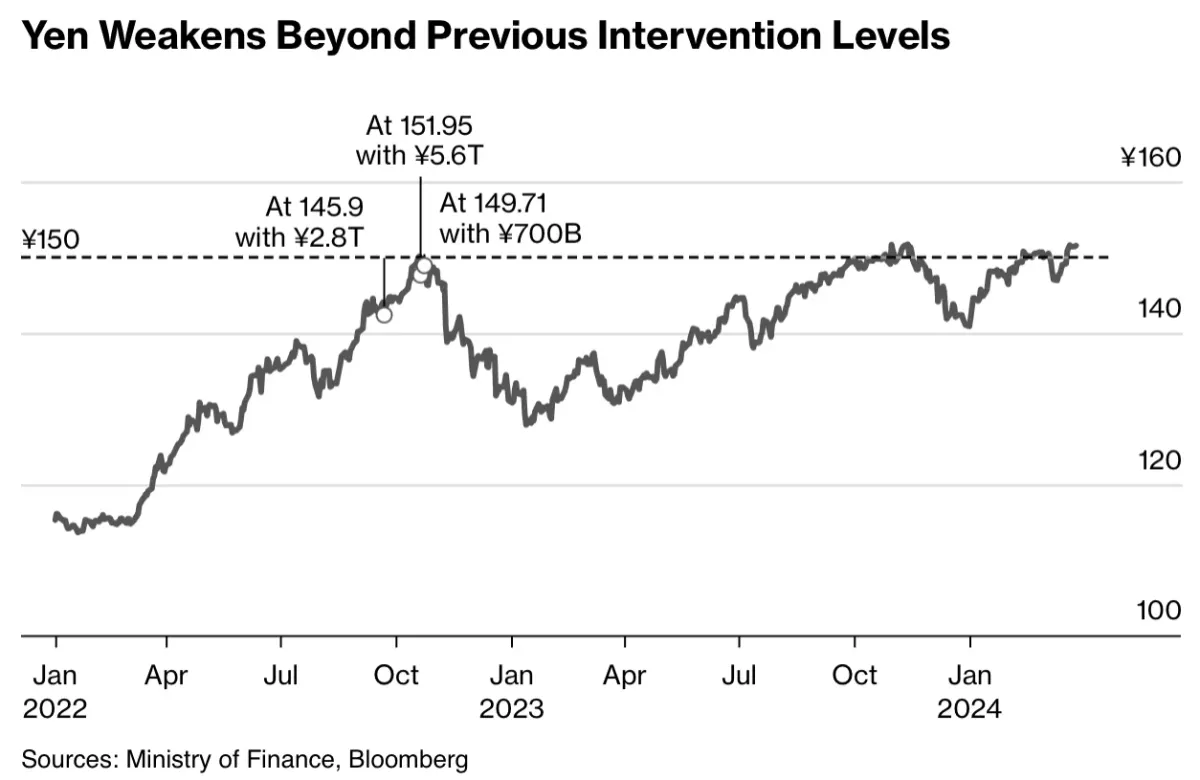
Japan is at a point of intervention as the Yen hovers at a 34-year low. “We are watching market moves with a high sense of urgency,” Finance Minister Shunichi Suzuki said. “We will take bold measures against excessive moves without ruling out any options.” Suzuki’s reference to bold action is generally interpreted to mean direct intervention in the currency market.
We talked at length on Japan in a recent issue but to the surprise of many, has been the rapid decline of the yen even after the BoJ raised interest rates for the first time since 2007. It all points to a growing tug-of-war between policymakers and markets over how far the yen can fall.
Now, Japan and others look to the Federal Reserve, where recently, a US recession appeared inevitable, now sees a tight labour market, sticky inflation and improving sentiment have led to a drop in expected interest-rate cuts this year. Traders are pricing in three quarter-point cuts in 2024, down from up to 150 basis points earlier this year. “This is a story of pure US exceptionalism,” said Stephen Miller, a four-decade markets veteran and consultant at Grant Samuel Funds Management Pty in Sydney. “Buying the dollar remains the number one trade.”
Exchange rates matter and even more so in a post-covid environment where many economies are still attempting to reduce exacerbated inflation to 2%-3% targets. Higher rates only increase the cost of imported goods and stoke the inflationary fire as the consumer is impacted by higher prices for general goods and services at the end of the supply chain. Additionally, growth stifles as money flows dry and investors seek higher yields elsewhere.
With Central banks about to commence the most aligned rate-cutting cycle since the global financial crisis in 2008, many will look to lead off on the Fed. “The euro fell to its lowest level this year as the European Central Bank looks set to cut interest rates before the Federal Reserve, fuelling market discussion of just how much further it could fall,” reported Bloomberg last week.
With traders already talking a return to parity being evident at some point, “the break of $1.07 was key, so it points to a move to $1.05 or even $1.04,” said Brad Bechtel, global head of FX at Jefferies in New York. His base case is for the euro to hit these levels as the ECB begins its easing cycle. “But if we get a further increase in geopolitical risk, then the USD will push the euro and other currencies even lower.”
“The dollar would just go through parity like a hot knife through butter” if the Fed holds rates while the ECB eases, said Moritz Kraemer, chief economist at LBBW. The bank forecasts the euro sliding to $1.01 in 2025 — the most bearish forecast of those compiled by Bloomberg.
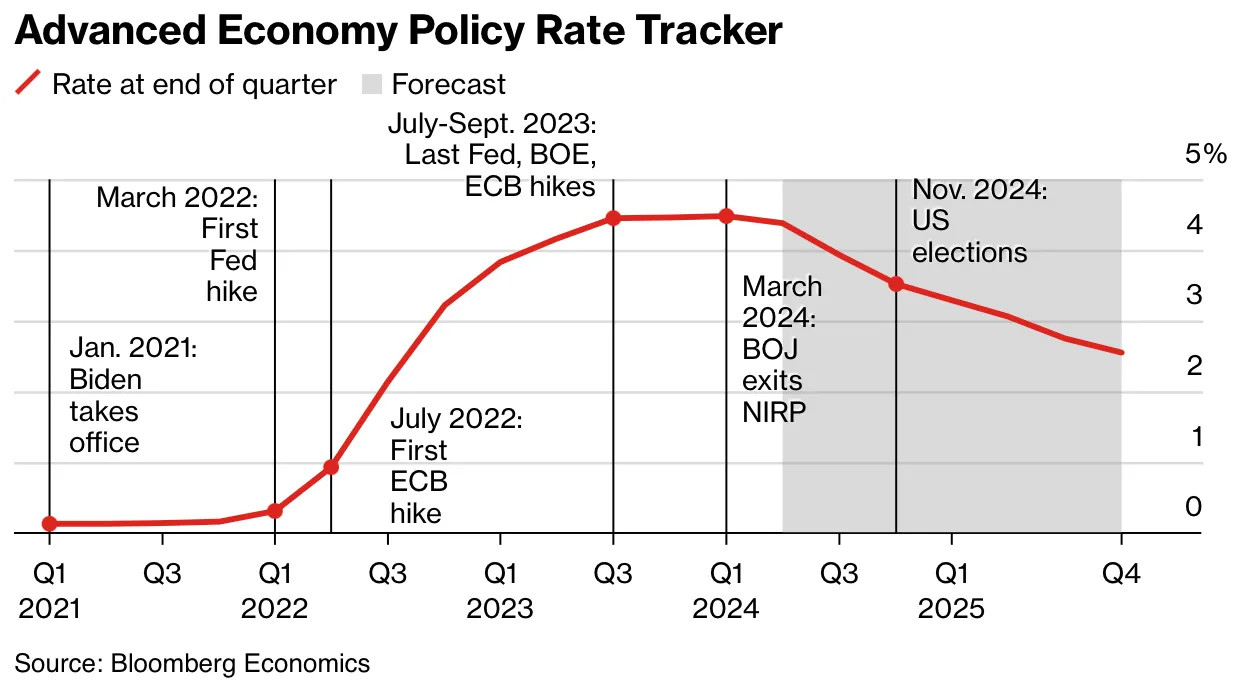
Central bankers are walking a tight rope between aiding economies and guarding against a resurgence in consumer price growth, with the waters being muddied further by an approaching US presidential election and increasing tensions in the Middle East. Many who thought 2024 would be the year of steadying prices and aggressive rate cuts are now seeing a reality of resilient growth, persistent price pressure and more measured, if not delayed, adjustments.
For many of us in Australia, with a current cash rate of 4.35% and a target of 2%-3%, it is expected the RBA will pivot and commence easing in the second half of this year. Bloomberg have forecasted an EOY position at 3.6%, which many consider quite aggressive.
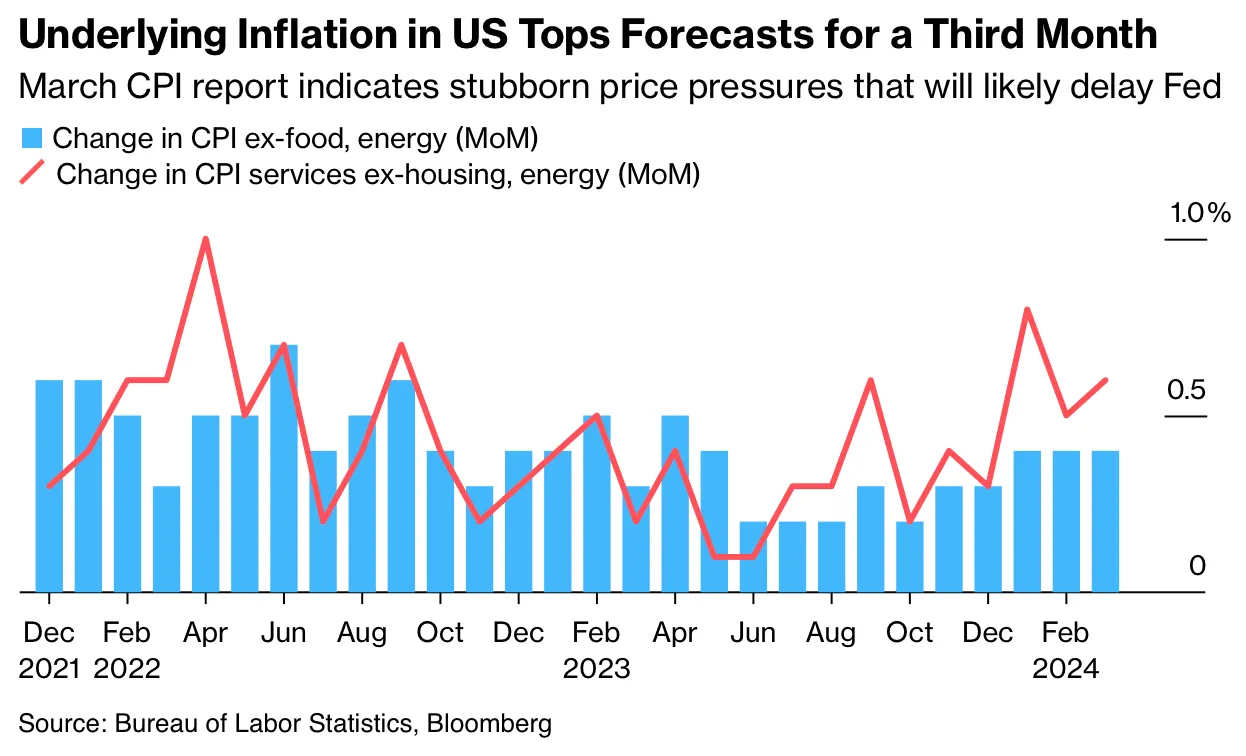
There is much we can speculate on but in reflecting on what we know to be true: hotter than expected US inflation data has shaken up expectations for the Federal Reserve to cut interest rates this year, the ECB will commence cutting ahead of the Fed adding further pressure to a spiralling Euro, and BoJ have proven historically that it will intervene to protect the yen that is now at multi-decade lows. Couple this with greatly increasing geopolitical risk and a Trump v Biden re-match - whatever your predictions, strap yourself in and always manage your risk tightly.
Parting Shot
"Some decisions are consequential and irreversible or nearly irreversible - one-way doors - and these decisions must be made methodically, carefully, slowly, with great deliberation and consultation. If you walk through and don't like what you see on the other side, you can't get back to where you were before. We can call these Type 1 decisions. But most decisions aren't like that - they are changeable, reversible - they're two-way doors. If you've made a suboptimal Type 2 decision, you don't have to live with the consequences for that long. You can reopen the door and go back through. Type 2 decisions can and should be made quickly by high judgment individuals or small groups."
— Jeff Bezos